


Kubernetes has moved from an experimental bet to the default way enterprises run production workloads. According to the CNCF Annual Survey, 82 percent of organizations running containers now run Kubernetes in production, up from 80 percent in 2024 and 66 percent in...
How to become a full-stack developer 2021?
If you’re keen on a job with a lot of variety, full-stack development could be a perfect option. According to the Stack Overflow 2016 Developer Survey, full-stack development is the most popular developer occupation. A full-stack developer role involves the intersection of multiple stakeholders, including business, technology, design, marketing, and leadership skills, with an end objective of building amazing products or applications. Today, there are hundreds of online and in-person classroom-based programs that will help you become a Full-Stack Developer.
The best talented full-stack developers usually start their career as a developer with a direction that involves multiple layers of application development. Here is a set of tips to become a full-stack developer over a period of time.
• Set Basics
It is important to understand the fundamentals and basic concepts. A full-stack developer is someone who is familiar with the entire set of tools and technologies related to application development. The beauty is that – a full-stack techie can dive into any part of the development stack and fix things – then and there.
Here is a list of things a full-stack developer to learn over a period of time:
- HTML, CSS, Angular, Bootstrap, JavaScript
- Java, C#, Python, C++, PHP, IOS, RUBY/RAILS, .NET (not all of these)
- Databases, Web Storage, SQL, NoSQL, MongoDB, Node.js
- HTTP, HTTPS, REST, SSL, Application Architecture, Git, Basic Algorithms & Data Structures
- AWS, Azure, Google Cloud
• Practice scripting and coding
Full-stack developers are able to build exceptionally stable enterprise applications and amazing products, and it requires extensive experience in programming and coding. The more you practice programming and overcome the fear of failure, the more you will advance as a full-stack developer.
• Build Skills- analytical, reasoning, and problem-solving
Inevitably, there will be challenges and bottlenecks, and need the analytical, reasoning, and problem-solving skills to work around them and set directions towards the end goal. Practice deductive reasoning, mental math, and hypothesis are some of the ways to improve these skills.
• Work on UI/UX
To become and succeed as a full-stack developer, you will need to keep the end-user in mind throughout the design and creation of application or product. This is where a UI/UX hands-on experience becomes critical.
• Be an active participant in Techie clubs
Be active in clubs at work and outside – like coding workshops, Hackathons, Stack Overflow, etc. Involvement in these techie clubs is a great way to connect with full-stack techies and collaborate with them and take you to the full-stack developer route. A full-stack developer with a quality-focused mindset is the one who is always looking for challenging projects and they prefer to be surrounded by similar kinds of people.
• Read extensively
It is important to assign some time to read relevant books, tech blogs, and community portals on a regular basis. Today, to attract the right full-stack developers – companies are willing to persuade them with stake and custom emolument options. Now, it is the time to set a direction and start acting on each of the actions, and you will be a full-stack developer.

Related Articles
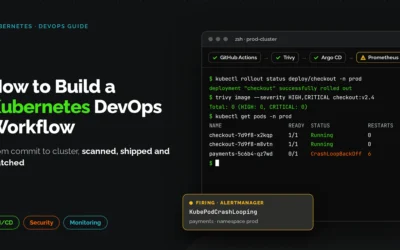
How to Build a Kubernetes DevOps Workflow: CI/CD, Security & Monitoring
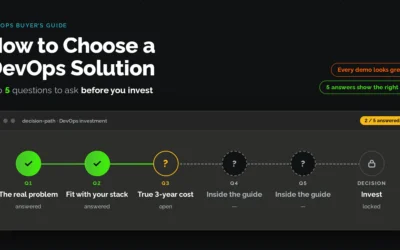
How to Choose a DevOps Solution: Top 5 Questions to Ask Before You Invest
Picking the wrong DevOps solution is an expensive mistake. Gartner reports that by 2026, 80% of large software engineering organizations will run dedicated platform engineering teams, up from just 45% in 2022. That shift means the market for DevOps support is crowded,...
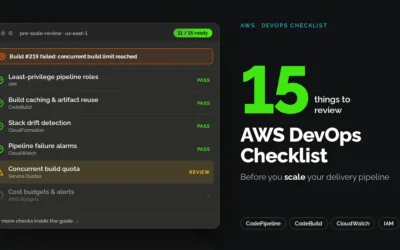
AWS DevOps Checklist: 15 Things to Review Before Scaling Your Delivery Pipeline
An AWS DevOps checklist is a structured review of four things: pipeline integrity, infrastructure and access controls, security posture, and observability. Teams run this review before scaling because the mistakes that go unnoticed at ten deployments a week tend to...
Did you find this page helpful?
