Kubernetes has moved from an experimental bet to the default way enterprises run production workloads. According to the CNCF Annual Survey, 82 percent of organizations running containers now run Kubernetes in production, up from 80 percent in 2024 and 66 percent in...
Top Seven Reasons Why Large Companies Fail to Keep Full-Stack Developers?
Top Seven Reasons
Why Large Companies Fail
to Keep Full-Stack Developers ?
August 12, 2019
Whether you are an Amazon of the world or a more recognized new generation company like Uber, large enterprises have a tough time keeping their full-stack developers in payroll.
It is evident that full-stack developers are able to build exceptionally stable enterprise applications and amazing products. Companies often try to accommodate custom emoluments and incentive systems to retain these talents. We could see different approaches that large enterprises try in relation to retaining full-stack developers.
Now, let’s look at the top seven lists of what large companies do to lose their top quality full-stack developers.
1. The dearth of Regular Development Project
High-quality full-stack developers are keen to be a part of a development project. Projects and products — that is really important that can change the world and they are always passionate about this. It is not necessarily money or promotion that make them excited.
Large enterprises find it challenging to provide development projects for the full-stack developers regularly and end up losing these talents.
Also, usually it is unlikely that enterprises can spend the time to create a direction for these high-quality developers.
2. Bureaucracy
Large enterprises usually have excessively complicated systems and processes’ in place. No one can expect any special treatment or consideration – though full-stack developers are capable of building incredible products and enterprise applications. Everyone will be measured under the same year-end appraisal process and bell curves.
3. Absence of proper performance-linked annual review
Not sure how many companies are able to perform effective annual performance reviews. It is often told that in large organizations manager is focused more on personal advancement than the betterment of the team. Someone like a full-stack developer can quickly realize this personal interest and hence, begin to lose the fire in the belly. Eventually, it leads to lose loyalty for an organization and decide to make a move.
4. Uncertainty of tomorrow
It’s evident that full-stack developers will play a primary role in product development and they are known for that. However, these developers are not sure about their next project allocation. They might be part of support project if there are no development projects are available.
Talented full-stack developers lose their energy and enthusiasm if they are not assigned on hardcore development or related projects.
If full-stack developers know that there are a path and direction for them going forward, they’ll be more likely to stick to the system.
5. Lack of challenging environment
A full-stack developer with a quality-focused mindset is always looking for challenging projects. They prefer to be part of similar kinds of people around them. In larger enterprises, training and deployment of fresher talent is the first priority. This leads full-stack developers to spend time in nurturing young talent compelling them to spare additional time for development and training.
6. Changing priorities
Apart from involving in product development, continuous enhancement, and support activities; full-stack developers are capable to go beyond and contribute to pre-sale and business development activities. Though full-stack developers are keen on new exciting projects to work on, often they are to work on many other activities as per the guidelines and changing priorities.
7. Multiple layers of hierarchy
Conventionally, companies have been structured around stiff hierarchies, always junior employees reporting to managers and managers to business heads, and so on. Hierarchy is common in enterprise organizations and often dangerous. Though the focus is on delivering value to customers, organizations are not agile.
The best and brightest full-stack techies can work proficiently and they are able to quickly engage with stakeholders and continuously deliver value to customers. The reporting hierarchy systems often bring them down.
The scarcity of talent will only increase in the next years — smart organizations are ones who hold the smart full-stack developers and retain them.

Related Articles
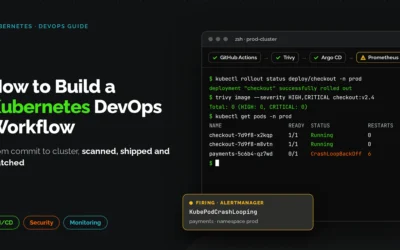
How to Build a Kubernetes DevOps Workflow: CI/CD, Security & Monitoring
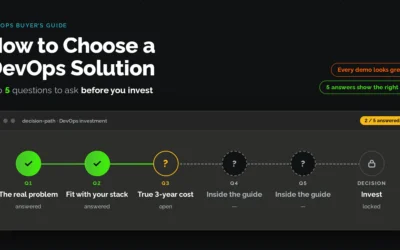
How to Choose a DevOps Solution: Top 5 Questions to Ask Before You Invest
Picking the wrong DevOps solution is an expensive mistake. Gartner reports that by 2026, 80% of large software engineering organizations will run dedicated platform engineering teams, up from just 45% in 2022. That shift means the market for DevOps support is crowded,...
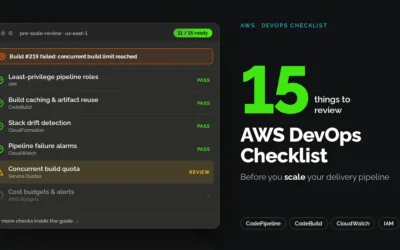
AWS DevOps Checklist: 15 Things to Review Before Scaling Your Delivery Pipeline
An AWS DevOps checklist is a structured review of four things: pipeline integrity, infrastructure and access controls, security posture, and observability. Teams run this review before scaling because the mistakes that go unnoticed at ten deployments a week tend to...
Did you find this page helpful?